
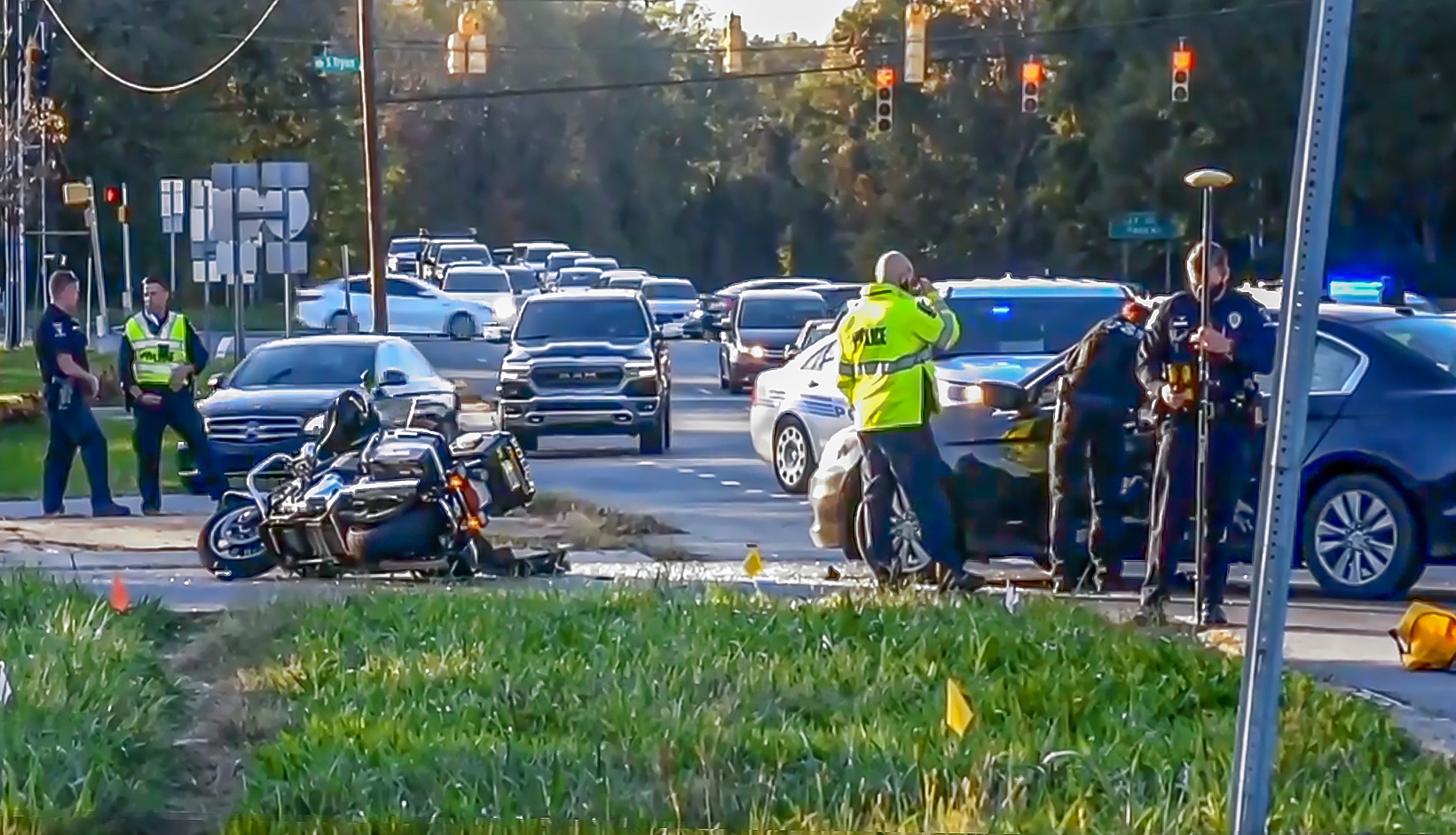
 A weekend ride out of Charlotte can put you on a South Carolina highway in under an hour. A crash there happens fast, and evidence scattered across the pavement vanishes faster. What you collect in the first hour can keep guesswork from deciding what happened. In a biker bias motorcycle accident case, that early record can keep stereotypes from filling the gaps.
Photographs and witness details preserve what the scene looked like. Damaged gear, the police report, and your medical records fill in the rest. None of it proves fault on its own. It replaces assumptions with a documented record, and you have to build it early because evidence disappears fast after the motorcycle and debris leave the scene. The witnesses drive off, too.
How to Document a South Carolina Motorcycle Crash Before Evidence Disappears
Safety and emergency care come before documentation. If a rider can’t safely collect evidence, they should ask a passenger or witness to help, or call someone they trust. Then work the sequence below.
- Move out of immediate danger and call for help
Get out of active traffic if you can move safely. Call 911 and request medical help when anyone may be hurt. Follow the dispatcher’s instructions until officers arrive.
Never step into a live lane for a photograph. The shot isn’t worth a second collision.
South Carolina Code § 56-5-1260 requires motorists to promptly report any traffic accident involving severe injury or death to local authorities. Drivers satisfy this legal requirement by immediately contacting the nearest Highway Patrol office, county sheriff, or city police department.
Note the exact location and your direction of travel. Add the nearest intersection and the time shown on your phone.
- Photograph the full scene before vehicles move
Once you’re safe, work through the shots in this order:
- Wide images first, from several safe positions.
- Photograph the motorcycle and every involved vehicle where it sits, including its relation to lanes, shoulders, and signals.
- Each vehicle’s direction of travel.
- Surface evidence: skid marks, gouges, and debris, plus any gravel, potholes, or standing water when relevant.
- Medium-distance and close shots of the impact points and damage.
- License plates and any visible identifying marks.
- Video for a continuous view, but only after the stills.
Those images do real work later. Understanding how biker bias can affect a motorcycle accident case often comes down to whose account the records support, and assumptions rush in wherever the documents run out. Photos pin down vehicle positions, road features, visibility, and physical damage before cleanup or towing changes the scene.
Keep the original files. Leave them unfiltered and unannotated, and keep them off social media. Originals may retain timestamps and other metadata that a screenshot loses.
- Record conditions the camera may not explain
Write down the weather and the available light. Note the traffic volume and direction, and how the signals were operating. Add whether the road markings were visible and anything that blocked your sightline.
Record sounds and smells too: a horn blast, the smell of leaking fuel.
A photograph can show wet pavement, but it can’t show when the rain started. Add a time next to each observation, something like “light rain, 3:42 p.m.”
- Identify witnesses and separate observation from opinion
Ask each witness for a full name and phone number, plus an email address if they will share one. Record where they were during the crash, then ask for a short account in their own words.
Do not coach a witness. Don’t fish for agreement that the other driver caused the crash. Record what the person saw and heard, not conclusions about fault.
An independent witness can challenge a rider stereotype by describing a specific fact, such as a left turn across the motorcycle’s path, rather than offering an opinion about who seemed reckless.
Check for cameras. A doorbell camera or dash cam may have caught the crash, and so might a shop’s security system or a traffic camera. Ask promptly, because some systems overwrite footage within days.
- Exchange information without debating fault
Get the other driver’s name and contact information. Photograph the driver’s license and insurance card; don’t copy the details by hand. Capture the license plate and vehicle details the same way.
Give the responding officer a short, factual account. Do not argue fault at the scene, and don’t guess about speed or distance. If you’re unsure about a detail, say you don’t know.
Before you leave, write down the officer’s name and badge number along with the incident number.
How Crash Scene Photos Help a Motorcycle Accident Case
Photos preserve spatial facts
Wide images hold what memory won’t. Your lane position, available sight distance, where every vehicle came to rest: the photo keeps it all after the pavement is swept.
A final resting position is one fact, not a complete reconstruction of the crash. Wide shots from three or four safe angles give reviewers more to work with later.
Damage patterns and riding gear add context
Contact marks and broken components can document the point of impact, and transferred paint may show which vehicles touched. Torn clothing and scuffed boots document the effects of the collision, and so does a damaged helmet.
Preserve the gear unchanged.
Washing, repairing, or discarding the gear can destroy what it may show.
Damaged riding gear can challenge a stereotype when its condition matches the reported impact and the injuries. Photograph each item before storing it separately in a clean, dry place, keep the helmet protected from further damage, and leave technical conclusions to a qualified reconstruction professional.
Evidence for a Biker Bias Motorcycle Accident Case
Biker bias is the assumption that you were speeding or riding recklessly because you were on two wheels. Overcoming biker bias after a motorcycle accident starts with replacing stereotypes with verifiable evidence. Countering it starts with a record built on verifiable facts.
Build a record from independent sources
Independent records corroborate separate pieces of the event. The police report fixes the reported time and place. Your photographs preserve the scene. Witness statements capture what people recall, and camera footage may show the collision itself. Repair documents and medical records tie the crash to property damage and reported injuries.
The point of all that paper is simple. Where the record is silent, an adjuster’s assumptions fill the gap.
Understand biker bias in South Carolina accident claims
Bias can shape a South Carolina claim at several points. It colors how witnesses describe the collision and how an insurer evaluates fault. It can even color how a fact-finder views the rider’s conduct. Objective records narrow the dispute to what can be verified.
South Carolina follows modified comparative negligence. A claimant’s share of fault reduces the available recovery and bars recovery entirely once it exceeds the defendant’s combined fault. The state Supreme Court adopted this framework in Nelson v. Concrete Supply Co., 399 S.E.2d 783 (S.C. 1991).
Are riders at fault in most motorcycle crashes?
No single national statistic proves that most motorcycle crashes are the rider’s fault. Fault turns on the facts of a specific crash. A single-vehicle incident, like a motorcycle running off a curve, isn’t the same as a collision involving another vehicle.
Do 90% of motorcycle accidents have one cause?
A claim that 90% of crashes share one cause is unreliable unless it identifies the study behind the number. Treat any percentage offered without that sourcing cautiously.
What is the leading cause of motorcycle crashes?
No single cause leads every motorcycle crash. Causes vary by crash type and location, so a single-cause claim needs support from a current report covering the relevant jurisdiction and collision type.
Which motorcycle types have the highest crash involvement?
Without defining the location, time period, and measure used, no motorcycle type can be called the one involved in the most accidents. Raw crash totals can reflect how common a motorcycle type is, while rates per registered bike or mile traveled may produce a different result. The motorcycle’s design alone does not establish fault in a particular collision.
Correcting Errors in a Motorcycle Accident Police Report
Separate factual errors from disputed judgments
A factual error is something you can check: a misspelled name, a wrong plate number, an inaccurate witness phone number.
A disputed judgment is another animal. An officer’s conclusion about speed or fault may need supporting evidence, and a clerical correction won’t supply it. Photographs or video may, and so can witness information.
Request the report and submit a factual correction
Get the report from the investigating agency. Contact the agency through its published records process or traffic unit and follow the procedure it provides.
Your correction request should identify the report or incident number. Quote the incorrect entry and state the accurate fact. Attach a photograph or witness detail that supports the correction, and ask whether the agency can add a correction or supplemental report. Keep proof of your submission and any response.
If a report contains an error that reinforces biker bias, name the exact error and provide objective support. Don’t argue fault in the request.
Procedures vary by agency, and many will add a supplement without revising the original report. Keep the request and response with your other crash records.
Preserve What Happens After the Crash
Write down your memory promptly
Record what happened before the impact, during the collision, and immediately afterward. Include your route and lane, and give an estimated speed only if you genuinely know it.
Write down the signals you observed and any statements you heard. Note when your pain started, and timestamp the account. Write it the same day if your condition allows, while the details are still fresh.
Don’t edit the original account later. Add separate, dated follow-up notes as additional details return to you.
Keep medical and property records in their original form
Emergency records and follow-up treatment establish a timeline, and diagnostic imaging and prescription records add detail. Repair estimates and towing invoices document property losses. Photographs of healing injuries connect visible changes to particular dates.
A medical record documents treatment and reported symptoms. It does not prove who caused the crash.
Protect digital evidence
Back up your original photos and videos to a second device or secure storage. Save dash-camera files before the system overwrites them. Export relevant messages or call logs, and preserve any location data on your phone.
Keep the crash off social media. A public post strips context from an image or a statement, and screenshots circulate without the full story.
Keep the motorcycle and gear unchanged when practical
Don’t authorize repairs or disposal before you thoroughly document the motorcycle. The same goes for any inspection that could alter or destroy a major component.
Storage rules or insurer requirements may force changes you can’t control. Document the motorcycle first, then respond to those requirements.
Keep the Record Focused on Verifiable Facts
Protect people first, then work the scene. Everything after that builds the record: reports, records, and backups that preserve verifiable facts. Memory alone is thin protection when someone assumes the rider was at fault. Back up your original files and save the incident number before the day ends.