The North Carolina Department of Transportation has just released new conceptual renderings for the controversial I-77 South toll lane project as political opposition continues growing across the Charlotte region.
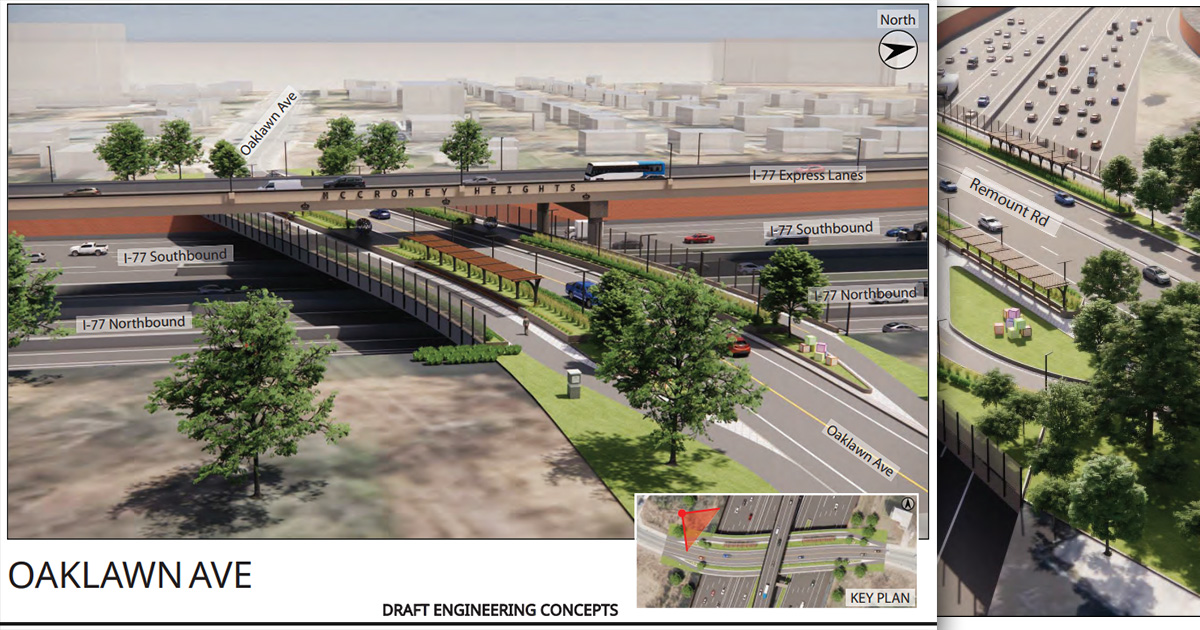
The updated images still feature elevated express lanes stretching through parts of Charlotte. However, the new concepts now include pedestrian bridges, greenway connections, wider sidewalks, park improvements, and neighborhood reconnection projects.
The proposed I-77 South Express Lanes project would expand Interstate 77 from Uptown Charlotte to the South Carolina state line by adding managed toll lanes and rebuilding portions of the I-277 interchange system.
The project remains part of the state’s 2026–2035 Transportation Improvement Program.
Debate surrounding the project intensified after the Charlotte City Council voted last week to rescind its previous support for the toll lane expansion pending additional studies and community review.
Meanwhile, leaders in Cornelius said Friday they do not support launching another toll project until existing I-77 toll lanes through Lake Norman show measurable improvement.
NCDOT’s newest conceptual designs focus heavily on reconnecting historically divided neighborhoods and improving pedestrian access along the corridor.
The proposed concepts include:
Reconnecting McCrorey Heights and Genesis Park near Oaklawn Avenue
Expanding pedestrian access between Biddleville, Uptown, and Frazier Park
Wider sidewalks and multiuse paths along West Trade Street
Greenway expansions and tunnels near Revolution Park
Improved bicycle and pedestrian connections near Remount Road
A large freeway cap reconnecting Wesley Heights and Biddleville to Uptown
Transportation officials say the concepts remain preliminary and could evolve based on community feedback and future development agreements.
Supporters argue the project is necessary to address worsening congestion and preserve transportation funding opportunities for Charlotte’s rapidly growing population.
Critics, however, continue questioning whether expanding toll infrastructure is the best long-term solution for mobility, affordability, and neighborhood preservation in the region.