North Carolina Issues Urgent Cybersecurity Warning as Global Threats Surge

Cyber threats tied to global tensions are rising, and North Carolina officials say the risks are growing quickly. State leaders now urge immediate action for agencies and state residents to secure protection immediately

The N.C. Department of Information Technology is calling on agencies, businesses, and residents to strengthen cybersecurity together. Officials say attacks are becoming more sophisticated and more frequent.

Cyberthreats are a real and growing risk,” said Governor Josh Stein in a press release. “North Carolina is taking these threats seriously and working with partners across government and the private sector to keep the state safe and strong.”

Recent intelligence shows an increase in cyber activity linked to nation-state actors. These groups often target infrastructure, including energy systems and financial networks.

Experts warn that global conflicts are now extending into cyberspace. Attackers aim to disrupt services, steal sensitive data, and damage public trust.

Ransomware incidents across the country highlight the threat. Some attacks have shut down government operations and disrupted emergency services.

North Carolina’s fast-growing tech economy adds urgency. Key sectors like health care, transportation, and government rely heavily on secure digital systems.

For the Charlotte region, the impact could be immediate. A major cyberattack could disrupt hospitals, delay services, or affect local businesses. Check out the NCDIT’s website for more info – https://it.nc.gov/programs/cybersecurity-risk-management.

South Carolina Regulators Greenlight Massive $3 Billion Data Center

South Carolina regulators have unanimously approved plans tied to a nearly $3 billion data center project in Spartanburg County.

The South Carolina Public Service Commission sided with North-Mark Strategies and Valara Holdings in the closely watched dispute.

Regulators determined the private technology company does not face the same regulatory process required for traditional power plants.

However, the massive Valara Project still faces a separate legal challenge from environmental advocates.

The Southern Environmental Law Center has asked a judge to halt construction. The group argues Spartanburg County improperly classified the project as a “minor development”.

According to the lawsuit, that classification allowed the development to bypass broader public review.

The proposed project would cover nearly 300 acres along South Pine Street, surrounded by several residential neighborhoods.

Plans also include a 460-megawatt gas-fired private power plant to supply electricity to the data center.

Environmental advocates say that plant could generate enough electricity to power every home in Spartanburg County and more.

The Public Service Commission’s decision clears another significant regulatory hurdle for developers. However, the pending lawsuit could still affect the project’s future.

The controversy comes as communities across the Carolinas increasingly debate massive data centers and their enormous energy demands.

Charlotte’s Data Center Moratorium Is Almost Over — City Launching 6 Community Meetings To Hear From Residents

0

Charlotte residents will get their first chance Wednesday to help shape the future of data center development across the city.

The city is launching six public feedback sessions throughout September while its 150-day pause on new data centers continues. Charlotte started the moratorium June 8 and is now more than halfway through it.

Officials and subject-matter experts will discuss data center impacts and answer questions from residents. They will also explain how city, county and state governments can influence future development.

Public feedback could ultimately help shape new policies once Charlotte’s temporary development pause ends.

Charlotte’s six scheduled meetings include:

  • Wednesday, Sept. 2, 3-5 p.m. — Hornets Nest Park, 6301 Beatties Ford Road
  • Thursday, Sept. 10, 6:30-8:30 p.m. — One Water Facility, 4100 W. Tyvola Road
  • Tuesday, Sept. 15, 6:30-8:30 p.m. — Project 658, 3646 Central Avenue
  • Friday, Sept. 25, noon-2 p.m. — Virtual meeting via Zoom
  • Saturday, Sept. 26, 4-6 p.m. — University City United Methodist Church, 3835 W. W.T. Harris Boulevard
  • Tuesday, Sept. 29, 6-8 p.m. — Virtual meeting via Zoom

All meetings are open to the public and will allow residents to ask questions and provide feedback.

With the 150-day moratorium ticking down, September’s meetings could significantly influence what Charlotte allows next.

Steps to Take After a Serious Auto Accident Injury Today: A Guide

0

Lancaster, California, is a busy Antelope Valley community where residents depend on reliable transportation for work, family commitments, appointments, and connections throughout the region. A serious auto accident can abruptly interrupt that routine, raising immediate health concerns and introducing practical challenges that may persist long after the vehicles leave the roadway. For someone dealing with significant injuries, the decisions made in the aftermath can influence how effectively medical needs, financial pressures, and potential legal concerns are addressed. The situation can become especially difficult when a victim is coping with pain while trying to understand what information to preserve, whom to notify, and what choices could affect a future claim. Taking a measured approach can help prevent avoidable complications during an already stressful period. For Lancaster residents facing the aftermath of a serious collision, consulting a Lancaster car accident lawyer can help protect important interests while allowing the injured person to focus on recovery and the road ahead.

Call 911 and Get Medical Care

After a serious crash, an injured person may feel pressure to explain events before a physician completes an examination. Medical care remains the first priority, since shock can mask internal bleeding, head trauma, or spinal injury. A lawyer can assess available facts, explain claim procedures, and help limit statements that could later conflict with medical findings or eyewitness evidence.

Follow Emergency Instructions

Emergency personnel should receive a complete account of pain, numbness, bleeding, breathing difficulty, and confusion. A person should avoid unnecessary movement when neck or back trauma seems possible. Relocation may be necessary if a fire, traffic, or other hazard threatens safety. Witness names, phone numbers, and observations should be collected when health permits, and the police report number should be saved afterward.

Record Injuries and Symptoms

Photographs can document swelling, bruising, lacerations, casts, and restricted movement. Treatment remains more important than photography, so images should be taken only after a clinician’s directions are followed. A dated symptom log may reveal changes in pain, balance, concentration, sleep, or strength. Doctors can use those details to evaluate progression and connect later complaints with the collision.

Preserve Crash Evidence

Vehicle damage should be photographed before repairs begin. Useful images may show crushed panels, broken glass, deployed airbags, seat positions, roadway markings, debris, weather, and traffic signals. Dash camera footage should be copied promptly because many systems overwrite older files. Repair estimates, towing invoices, inspection reports, and photographs belong in one secure folder.

Exchange Information Carefully

Drivers should exchange names, telephone numbers, license details, registration information, and insurance data. A roadside discussion should remain calm and factual. Statements about fault, speed, or physical condition can be incomplete during shock. Saying that everything feels fine may create an inaccurate impression if symptoms develop later. Questions should be directed to the police or medical staff instead of being argued beside damaged vehicles.

Notify the Insurance Company

The insurer should receive timely notice in accordance with the policy’s reporting requirements. Initial communication can cover the collision date, location, vehicles, injuries, and current treatment. A recorded interview, medical authorization, or settlement proposal requires careful review before signing. Copies of emails, letters, claim numbers, adjuster notes, and submitted forms should be retained throughout the process.

Track Financial Losses

An organized file should contain hospital bills, prescription receipts, therapy charges, mileage records, and transportation costs. Pay stubs can document missed shifts or reduced earnings. Self-employed workers may need invoices, appointment calendars, canceled contracts, and tax records. Household assistance also matters, particularly if injury prevents cooking, cleaning, childcare, or ordinary personal tasks.

Preserve Any Proof of Recovery

Follow-up visits should be kept, and prescribed treatment should continue unless a doctor changes the plan. Missed appointments may raise questions about symptoms, even when cost, transportation, or scheduling caused the absence. Written work restrictions can help employers assign safe duties. Family observations may also document changes in memory, mood, mobility, sleep, or independence.

Consider Legal Deadlines

Filing periods vary depending on the type of claim, government vehicles, insurance policies, and the parties involved. Notice requirements may apply before a lawsuit can proceed. Evidence can disappear as vehicles are repaired, surveillance recordings expire, or witnesses forget details. Early legal review gives an injured person time to identify responsible parties, preserve material, and evaluate potential damages.

What to Do Right After An Auto Accident

The first response after a severe auto accident should center on medical safety, accurate information, and careful preservation of proof. Emergency treatment can identify hidden injuries, while photographs, bills, symptom notes, and employment records establish the effects of trauma. Insurance materials deserve close review before any signature is provided. Timely legal guidance may clarify deadlines, responsibility, and available compensation, allowing the injured person to focus on measurable recovery.

Why Leading Locum Tenens Agencies Are Earning Provider Trust Fast

0

Provider trust now shapes the success of locum tenens staffing. Physicians and advanced practice providers expect accurate assignment details, prompt answers, fair contracts, and dependable assistance after placement. Healthcare facilities need coverage that protects appointments, clinical capacity, and team stability. Agencies that earn trust meet both needs through specialty knowledge, efficient credentialing, open communication, and careful matching. Their approach strengthens professional relationships while helping hospitals and practices maintain reliable access to qualified clinicians.

Trust Begins With Provider Choice

Clinicians want a clear voice in assignment length, location, schedule, compensation, and clinical duties. Agencies that respect those preferences establish credibility early. A provider evaluating one of the top locum tenens agencies in 2026 may look beyond pay rates. Accurate job descriptions, candid discussions, and prompt replies allow medical professionals to choose assignments with fewer surprises. That level of transparency often encourages future collaboration.

Specialty Knowledge Improves Matching

Staffing conversations become more useful when recruiters know the clinical discipline involved. Anesthesia, cardiology, emergency medicine, gastroenterology, psychiatry, radiology, and surgery each carry different credentialing rules and workflow demands. Specialty-focused representatives can discuss call coverage, patient volume, practice structure, and team expectations with greater precision. Better screening supports stronger placements and reduces the likelihood of an assignment ending because essential details were overlooked.

Speed Protects Clinical Continuity

An open shift can strain permanent staff and postpone appointments. Efficient agencies reduce delays by organizing licensing, privileging, references, and documentation early. Reported averages include 4.2 business days for hospital privileging applications and 3.88 business days for state licensing submissions. Confirmation letters may reach clinicians and facilities within 1.8 hours. These measures reflect operational control, which matters when coverage is urgently needed.

Support Extends Beyond Placement

Placement marks the beginning of an assignment, not the end of service. Providers may need guidance with travel, housing, schedules, facility contacts, documentation, or changing clinical needs. Reliable recruiters remain reachable throughout the engagement. Consistent assistance gives clinicians a known resource when problems surface. Facilities also receive clearer updates, helping prevent confusion during handoffs, schedule changes, or unexpected coverage gaps.

Flexible Work Builds Loyalty

Locum tenens work can suit physicians seeking schedule control, geographic variety, short-term coverage, or a transition between permanent positions. Agencies gain loyalty when they ask about career plans before suggesting openings. Options may include brief assignments, longer contracts, and paths from temporary work into permanent employment. This range lets clinicians assess practice settings without surrendering control over their next professional decision.

Transparent Numbers Strengthen Confidence

Staffing decisions carry measurable financial consequences. Nearly half of hospitals have operated at a loss, while a physician vacancy can represent an estimated daily revenue loss of $6,575. Permanent recruitment may require eight months. Such figures explain why timely temporary coverage deserves serious consideration. Clear data helps administrators compare options, set realistic expectations, and judge agency performance without depending on broad promotional claims.

Provider Care Supports Patient Care

Clinicians are more prepared to serve patients when assignment expectations, resources, and communication channels are clear. Reported provider placements have supported care for more than 1.5 million patients. Many factors influence clinical outcomes, including staffing ratios, facility processes, and patient acuity. Even so, provider experience remains relevant. Agencies that address burnout risk, assignment fit, and communication help professionals stay focused during demanding rotations.

Reliable Coverage Helps Facilities

Hospitals and practices need clinicians who arrive prepared, communicate effectively, and work well with established teams. Trusted agencies can respond during vacations, medical leaves, turnover, census increases, and service expansion. Timely coverage protects appointment availability while reducing pressure on employed staff. The best matches consider both sides of the arrangement, including professional goals, credentialing readiness, patient volume, call expectations, and local operating conditions.

Results Turn First Assignments Into Partnerships

A strong placement process continues through feedback, issue resolution, and future planning. Agencies that review assignment performance can identify better matches over time. Reported return estimates may reach six times the original investment, although outcomes depend on specialty demand, regional shortages, contract length, and internal operations. Responsible staffing partners present these figures as estimates. Trust develops through consistent delivery, not a single favorable placement.

Conclusion

Leading locum tenens agencies are gaining provider trust by combining personal attention with measurable execution. Specialty expertise, accurate communication, flexible contracts, efficient credentialing, and dependable follow-up address the concerns clinicians and facilities face every day. Providers receive greater control over professional choices, while healthcare organizations protect clinical capacity and patient access. As staffing shortages persist through 2026, agencies that respect medical professionals will be better positioned to build lasting partnerships.

How State Lines Affect Wrongful Death Claims After a Commercial Truck Crash

0

Commercial trucking relies heavily on interstate travel to transport freight across the country. Because these routes span thousands of miles, serious collisions frequently happen far from the homes of the passenger vehicle drivers or the commercial operators involved. This cross-border reality introduces complex legal challenges for families seeking justice after a fatal crash. According to the Federal Motor Carrier Safety Administration, nearly 27 percent of all fatal crashes involving large trucks occur on Interstate highways, and 54 percent take place in rural areas, as detailed in their Large Truck and Bus Crash Facts 2022 report. With over 6,000 large trucks and buses involved in fatal crashes in a single year, many families find themselves navigating a confusing maze of unfamiliar state laws and federal regulations just to hold the responsible parties accountable. The shock of losing a family member is devastating enough without the added burden of deciphering out-of-state legal systems.

How State Geography Dictates Legal Action

Historically, courts resolving cross-border accidents followed a rigid legal doctrine known as lex loci delicti, which meant the laws of the state where the crash happened dictated the entire civil lawsuit. Today, certain courts have abandoned this strict rule in favor of a significant contacts approach, evaluating which state has the most compelling interest in a cross-border dispute. This shift means that resolving a fatal truck crash requires deep knowledge of the specific state court system where the incident took place. Geography plays a fundamental role in determining both the legal strategy and the potential outcome of a case.

For example, a regional carrier might cause a massive collision along high-risk freight corridors like Interstate 80 or Interstate 81. Because these mountain routes see frequent winter weather shifts and high-speed commercial traffic, they are common sites for severe accidents. If a loved one is killed along one of these routes in Pennsylvania, the surviving family will likely need a local Pennsylvania wrongful death lawyer to interpret the state court procedures. Hiring legal counsel familiar with the exact location of the crash ensures the family does not miss critical deadlines or fall victim to unfamiliar local rules that could jeopardize their pursuit of justice.

Proving Fault at the Corporate Level

Before evaluating the nuances of state tort laws, families and their legal advocates must determine who is actually responsible for the collision. While an individual driver might make a fatal error on the highway, a larger corporate entity is often the root cause of the danger. Regardless of where the accident occurred, commercial truck drivers and their employers are bound by the Federal Motor Carrier Safety Regulations under Title 49 of the Code of Federal Regulations. These national rules govern everything from driver qualifications to electronic logging device requirements. These federal mandates establish a baseline of safety that supersedes local traffic laws.

If a carrier ignores these regulations to prioritize profits, they invite severe legal consequences. For families wondering about corporate accountability, understanding how a truck company can be held liable for an accident is a crucial first step. Legal teams also rely on federal databases to track a carrier’s nationwide inspection history and safety compliance audits before filing a lawsuit. Identifying these systemic failures is often the key to proving negligence on a massive scale.

Crucial Disparities in Wrongful Death Statutes

State laws differ wildly when it comes to compensating grieving families. A strategy that works perfectly in a victim’s home state might result in a dismissed case just across the border. Families facing a cross-border claim must account for several major variables:

  • Statutes of Limitations: Every state limits the time available to file a lawsuit. In Pennsylvania, the surviving family has exactly two years from the date of death to take legal action.
  • Negligence Rules: States apply different fault standards. North Carolina uses a strict pure contributory negligence rule, meaning a victim found even one percent at fault cannot recover damages. Other states use a more forgiving comparative negligence standard.
  • Damage Caps: Some jurisdictions place strict maximum limits on what a jury can award. Conversely, the Pennsylvania State Constitution specifically forbids maximum caps on compensatory damages for emotional and economic losses.
  • Punitive Damages: If an out-of-state trucking company is proven to be highly reckless, some states allow juries to award punitive damages. However, these are often legally capped at a certain percentage of the compensatory damages awarded.

Securing Justice Across Borders

Holding a commercial trucking company accountable is never a simple process. Recent data reveals that in heavy truck collisions, passenger vehicle occupants bear the vast majority of the fatal risk. When a family loses someone in an interstate crash, they face massive corporate defense teams alongside confusing geographical legal hurdles. A prompt, thorough investigation is necessary to preserve evidence that might otherwise disappear or be destroyed by the trucking company.

Federal databases track a carrier’s nationwide safety compliance, but it is ultimately state law that determines how a grieving family is compensated. Understanding how state lines impact wrongful death claims is an essential part of securing financial stability and finding justice after a catastrophic loss.

That Rendering on the Fence Does Not Mean It Is Getting Built

0

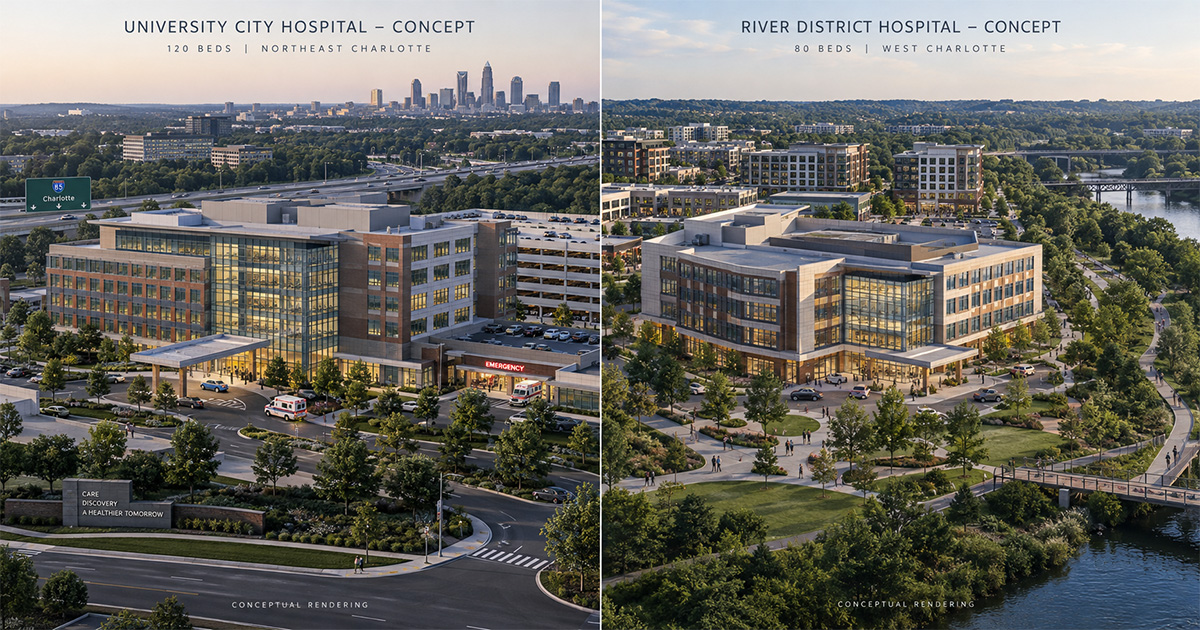
A sign goes up on a vacant lot in your neighborhood. There is a picture on it: glass, a courtyard, a coffee place on the corner, people walking around in the early evening. Underneath, a name and a phone number.

The reasonable assumption is that this is happening. Often it is not, or not for a long time, or not in anything like the form on the sign. Charlotte has been growing fast enough for long enough that most residents have watched at least one beautiful picture sit on a fence for three years and then come down without a shovel ever touching the dirt.

The images themselves contain a surprising amount of information about which category a project falls into. You just have to know what you are looking at.

A rendering marks a stage, not a decision

Projects move through phases: an idea, a design, a submission for approval, financing, permits, and finally construction. Images get made at almost every one of those steps, and they get reused long afterward.

So the picture on the fence might be eighteen months old and describe a version of the building that the design team abandoned last spring. It might also be a concept produced to attract investors who never came. Nothing about a printed image tells you which.

Nothing, that is, except the level of detail. And that turns out to be a decent proxy for how far along the whole thing is.

Detail costs money, and money follows commitment

Early concept images are loose. Generic windows, vague materials, a building that could be anywhere, landscaping that looks like a stock photograph. That is what a developer commissions when the project is still an argument being made to somebody.

Fully resolved images are different. You can count the floors, identify the actual brick, see where the loading dock goes and how the ground floor meets the sidewalk. Somebody paid for a detailed model of a specific building, which happens when the design is settled and money is committed.

It is not a guarantee. Plenty of well-drawn projects die when rates move or an anchor tenant walks. But a developer who has paid for that level of work has usually also paid architects, engineers and consultants, and a project carrying that much sunk cost is harder to abandon than one that exists as a single picture.

Signals that a project is real

Multiple views of the same building. One hero image is cheap. Six consistent images from different angles means a full model exists.

Interior images as well as exterior. Interiors get commissioned when there are units or suites to sell or lease, which means the pro forma is far enough along to matter.

Correct neighbors. If the buildings around the site are recognizably the ones actually there, the studio was given real survey data. Nobody buys that for a hypothetical.

A leasing or sales contact that actually answers the phone. Unglamorous, and probably the most reliable signal on the list.

Signals to hold loosely

Sunset light and no cars. Standard practice, tells you nothing either way.

A gorgeous single image with no address. Concept work, often produced for a pitch rather than a project.

Landscaping that looks like a park. Trees in renderings are drawn at maturity, so the shaded plaza in the picture is that plaza in fifteen years.

Retail on the ground floor. It appears in nearly every rendering because it makes the image feel alive. Whether a tenant ever signs is another matter entirely, and in a lot of Charlotte projects those spaces sit empty for a while after opening.

Where to look besides the fence

Bigger projects go through public review, and the material filed there is more useful than the marketing: elevations with dimensions, massing studies, and shadow diagrams showing what the building does to the light on neighboring properties. Public meetings are held, and comment periods are open to residents.

Permit records are the other tell, and they are public. A project with a demolition permit pulled and a foundation permit filed is happening. A project with a rendering and nothing else behind it is a proposal, however good the picture looks.

Why developers spend on this at all

Because in a market like Charlotte you are competing for money, tenants and approval simultaneously, and none of those audiences can read a floor plan. Firms offering 3D rendering services in North Carolina work with developers across Charlotte, Raleigh and Asheville doing exactly this: turning drawings into something a lender or a city council can respond to.

The range of CGI solutions for developers has widened a lot too, from single exterior views to interactive walkthroughs and aerial context shots. Which of those a project buys is itself a clue about how serious it is.

What changes between the picture and the building

Even on projects that get built, three things routinely shift. Facade materials get substituted during cost review, and the warm brick in the image becomes a cheaper panel. Balconies get simplified or removed. And the landscaping budget, which sits at the end of the job, absorbs whatever overruns happened earlier.

None of that is unusual or dishonest. It is how construction works when a project takes three years and prices move underneath it. But it does mean the finished building is almost always a slightly plainer relative of the one on the fence.

The habit worth adopting

Photograph the sign. Note the date on your phone. Then go back in a year and see what is standing there.

Across a neighborhood, that simple record tells you which developers deliver what they show and which ones repeatedly do not, and that is genuinely useful information the next time a picture appears on a fence near your house.

The rendering is not the building. It is somebody’s best case, made at a specific moment, for a specific audience. Read it that way and it becomes a much more interesting object.

Why an ERP Built for Promo Distributors Outperforms Generic Tools

0

Promotional product distributors manage quotes, artwork, supplier requirements, inventory, shipping, approvals, and invoices in a single customer order. Generic business software often separates those activities, forcing employees to move information between applications. That process increases entry errors, slows responses, and obscures true job costs. An industry-focused enterprise resource planning platform connects commercial, operational, and financial records, helping distributors protect margins while giving customers clearer answers throughout each order.

Built for Promo Workflows

Promotional orders contain details that standard business platforms rarely handle comfortably. Decoration methods, color counts, proof approvals, supplier deadlines, and split deliveries can alter costs and timing. An Enterprise Resource Planning System for Promotional Product Distributors keeps those details connected from the first quotation through final payment. Sales representatives can view approved artwork, purchasing staff can confirm supplier commitments, production coordinators can follow required processes, and accounting teams can bill from one dependable record.

Better Order Accuracy

Many generic tools require workers to re-enter quantities, addresses, prices, and delivery dates across several applications. Every transfer creates another opportunity for an incorrect value. A promo-focused platform carries approved details through quoting, purchasing, production, fulfillment, and invoicing. Fewer handoffs reduce corrections, prevent avoidable delays, and help customers receive the products and information originally promised.

Smarter Supplier Coordination

Supplier communication influences production timing, decoration charges, freight expenses, and customer expectations. An industry-focused platform places purchasing information beside the related sales order. Staff can review costs, responses, and promised dates without searching through separate email threads. That shared record helps buyers compare options, identify schedule risks earlier, and give account representatives useful updates before a delay affects the customer.

Stronger Inventory Control

Distributors may manage blank goods, samples, packaging, imported products, and stock held at several locations. Basic inventory software can show quantities without showing how those goods fit current commitments. A specialized platform connects available units with open orders, purchase activity, and shipment plans. Managers can replenish with more confidence, avoid unnecessary shortages, and limit surplus stock that ties up cash and storage space.

Improved Financial Control

Profit margins can narrow through missed charges, outdated costs, freight changes, supplier rebates, or late invoices. An integrated platform connects selling prices, supplier expenses, decoration fees, shipping charges, and receivables. Finance teams gain a clearer view of expected and realized profit on each transaction. Leaders can also identify weak categories, costly processes, and accounts that need revised pricing or payment terms.

Faster Customer Service

Customers often ask about artwork approval, quantities, production status, and delivery timing. Service teams lose valuable time when answers depend on separate applications or personal inboxes. A unified order record gives authorized employees access to current details and prior activity. Faster responses reduce repeated questions, support trust, and give account representatives more time for thoughtful client communication.

Useful Management Reporting

Generic platforms may produce broad sales reports, but distributors need measures tied to their operating model. Useful indicators include quote conversion, average order value, supplier performance, margin by decoration method, production delays, and receivable aging. Connected reporting gives those figures practical meaning. Managers can see which activities support profit, where capacity is being lost, and which procedures need correction.

Why Generic Tools Fall Short

Generic applications serve many industries through common workflows. That flexibility becomes restrictive when employees create workarounds for proofs, supplier costs, kits, split shipments, or decoration stages. Custom fields and extra integrations may fill individual gaps, yet they often increase maintenance work and training demands. A platform built around distributor activity reduces those adjustments and gives staff procedures that match their daily responsibilities.

A Practical Growth Foundation

Informal processes become difficult to monitor as order volume rises. New employees need repeatable procedures, while experienced staff need reliable information that does not depend on personal spreadsheets. An industry-focused platform provides shared workflows, permissions, integrations, and records that support expansion. Better consistency strengthens accountability, reduces dependence on individual memory, and helps leadership add capacity without multiplying administrative effort.

Conclusion

An ERP platform built for promotional product distributors reflects the details that influence revenue, costs, service quality, and delivery performance. It connects sales, suppliers, inventory, production, shipping, and finance within one operating record. Generic applications can manage isolated tasks, but employees often still have to bridge important gaps. Industry-focused software improves accuracy, communication, reporting, and control, giving distributors a sounder foundation for higher order volume and stronger customer care.

Why Leading Locum Tenens Agencies Are Earning Provider Trust Fast

0

Provider trust now shapes the success of locum tenens staffing. Physicians and advanced practice providers expect accurate assignment details, prompt answers, fair contracts, and dependable assistance after placement. Healthcare facilities need coverage that protects appointments, clinical capacity, and team stability. Agencies that earn trust meet both needs through specialty knowledge, efficient credentialing, open communication, and careful matching. Their approach strengthens professional relationships while helping hospitals and practices maintain reliable access to qualified clinicians.

Trust Begins With Provider Choice

Clinicians want a clear voice in assignment length, location, schedule, compensation, and clinical duties. Agencies that respect those preferences establish credibility early. A provider evaluating one of the top locum tenens agencies in 2026 may look beyond pay rates. Accurate job descriptions, candid discussions, and prompt replies allow medical professionals to choose assignments with fewer surprises. That level of transparency often encourages future collaboration.

Specialty Knowledge Improves Matching

Staffing conversations become more useful when recruiters know the clinical discipline involved. Anesthesia, cardiology, emergency medicine, gastroenterology, psychiatry, radiology, and surgery each carry different credentialing rules and workflow demands. Specialty-focused representatives can discuss call coverage, patient volume, practice structure, and team expectations with greater precision. Better screening supports stronger placements and reduces the likelihood of an assignment ending because essential details were overlooked.

Speed Protects Clinical Continuity

An open shift can strain permanent staff and postpone appointments. Efficient agencies reduce delays by organizing licensing, privileging, references, and documentation early. Reported averages include 4.2 business days for hospital privileging applications and 3.88 business days for state licensing submissions. Confirmation letters may reach clinicians and facilities within 1.8 hours. These measures reflect operational control, which matters when coverage is urgently needed.

Support Extends Beyond Placement

Placement marks the beginning of an assignment, not the end of service. Providers may need guidance with travel, housing, schedules, facility contacts, documentation, or changing clinical needs. Reliable recruiters remain reachable throughout the engagement. Consistent assistance gives clinicians a known resource when problems surface. Facilities also receive clearer updates, helping prevent confusion during handoffs, schedule changes, or unexpected coverage gaps.

Flexible Work Builds Loyalty

Locum tenens work can suit physicians seeking schedule control, geographic variety, short-term coverage, or a transition between permanent positions. Agencies gain loyalty when they ask about career plans before suggesting openings. Options may include brief assignments, longer contracts, and paths from temporary work into permanent employment. This range lets clinicians assess practice settings without surrendering control over their next professional decision.

Transparent Numbers Strengthen Confidence

Staffing decisions carry measurable financial consequences. Nearly half of hospitals have operated at a loss, while a physician vacancy can represent an estimated daily revenue loss of $6,575. Permanent recruitment may require eight months. Such figures explain why timely temporary coverage deserves serious consideration. Clear data helps administrators compare options, set realistic expectations, and judge agency performance without depending on broad promotional claims.

Provider Care Supports Patient Care

Clinicians are more prepared to serve patients when assignment expectations, resources, and communication channels are clear. Reported provider placements have supported care for more than 1.5 million patients. Many factors influence clinical outcomes, including staffing ratios, facility processes, and patient acuity. Even so, provider experience remains relevant. Agencies that address burnout risk, assignment fit, and communication help professionals stay focused during demanding rotations.

Reliable Coverage Helps Facilities

Hospitals and practices need clinicians who arrive prepared, communicate effectively, and work well with established teams. Trusted agencies can respond during vacations, medical leaves, turnover, census increases, and service expansion. Timely coverage protects appointment availability while reducing pressure on employed staff. The best matches consider both sides of the arrangement, including professional goals, credentialing readiness, patient volume, call expectations, and local operating conditions.

Results Turn First Assignments Into Partnerships

A strong placement process continues through feedback, issue resolution, and future planning. Agencies that review assignment performance can identify better matches over time. Reported return estimates may reach six times the original investment, although outcomes depend on specialty demand, regional shortages, contract length, and internal operations. Responsible staffing partners present these figures as estimates. Trust develops through consistent delivery, not a single favorable placement.

Conclusion

Leading locum tenens agencies are gaining provider trust by combining personal attention with measurable execution. Specialty expertise, accurate communication, flexible contracts, efficient credentialing, and dependable follow-up address the concerns clinicians and facilities face every day. Providers receive greater control over professional choices, while healthcare organizations protect clinical capacity and patient access. As staffing shortages persist through 2026, agencies that respect medical professionals will be better positioned to build lasting partnerships.

Gastonia Man w/ Long Rap Sheet Facing New Charges After Felony w/ Child

0
A Gaston County man with a lengthy rap sheet stretching back over a decade is now facing severe new felony charges regarding children.
Daniel Lee Bumgardner was booked into the Gaston County jail on August 31, 2026 with the following charges: 
* Indecent Liberties, Child
* DISSEMINATE OBSCENE MATERIAL TO MINOR UNDER 1

Under North Carolina law, these charges are treated with the utmost severity, often involving specialized municipal units or regional Internet Crimes Against Children (ICAC) task forces.
A History of Property Crimes
Over the last ten years, Bumgardner’s interactions with regional law enforcement have primarily centered around a prolific pattern of theft and property damage across multiple neighboring counties:
    • August 2016: Bumgardner faced a laundry list of charges after a string of vehicle break-ins. The Gaston County Sheriff’s Office hit him with multiple counts, including breaking and entering motor vehicles, larceny of a motor vehicle, felony larceny, possession of stolen goods, injury to personal property, and possession of a stolen firearm.
    • August 2017 & March 2018: The Lincoln County Sheriff’s Office arrested Bumgardner on separate occasions, tracking a repeating cycle of multiple larceny counts.
    • December 2015: He was also tied to larceny charges out of Stanley, North Carolina.

What Comes Next
The stark escalation from property crimes and theft to offenses involving minors has drawn intense focus to his current case. Bumgardner remains in custody as the judicial process begins.
As this is an active and unfolding investigation, definitive details regarding his bond conditions, upcoming court appearances, and legal representation are being updated through the North Carolina Court System’s public calendars and the official portal of the Gaston County Sheriff’s Office.