
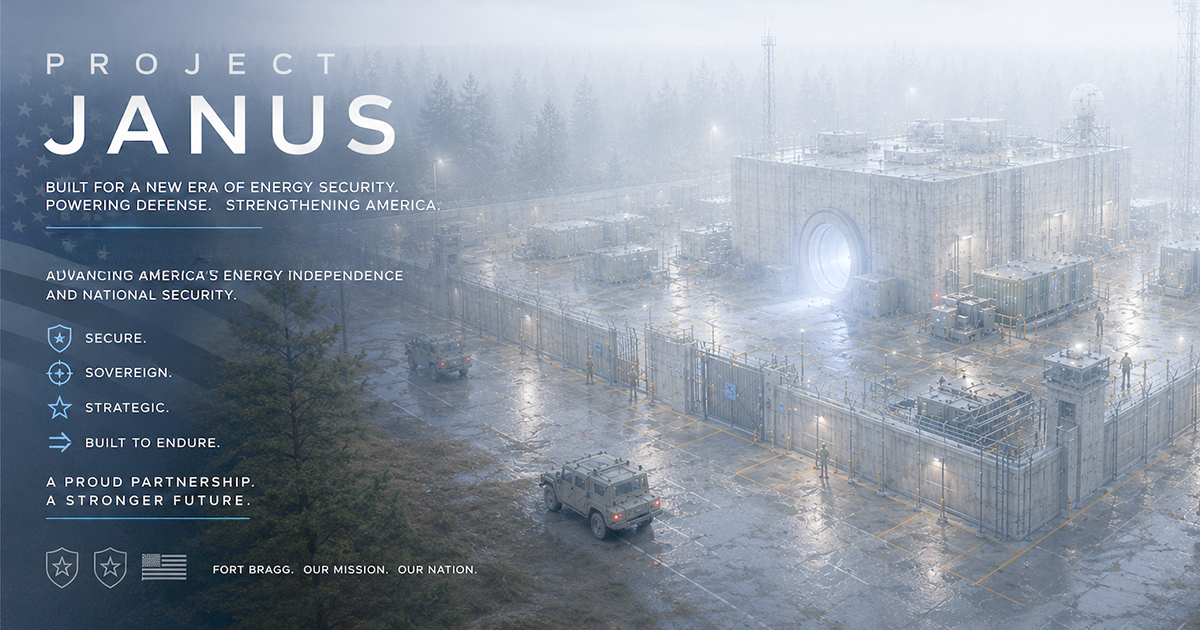
 North Carolina’s largest military base has just been selected to host a new generation of advanced nukes under a historic US Army program called ‘Project Janus’.
The Army selected Antares Nuclear to develop a commercial nuclear microreactor at NC’s Fort Bragg. The project is part of the new Janus Program, which initially includes five major Army installations.
“We need more power. We need it delivered faster and cheaper, and we need it to be more reliable,” said Owen West, director, DIU in a press release. “With Janus, DIU is assisting the Army’s micro reactor build — speeding military energy production to protect the nation.”
The federal government plans to provide up to $2.2 billion between 2027 and 2031 for the broader program. Combined with private investment, the Army expects more than 20 nuclear microreactors across military installations nationwide.
The first reactor project is expected to enter useful service by September 2028. Private contractors will build, own and operate the reactors rather than the military.
Fort Bragg joins Fort Campbell in Kentucky, Fort Hood in Texas, Fort Benning in Georgia and Fort Drum in New York. Each installation will work with a different nuclear technology company.
The Army says microreactors could provide reliable power while strengthening energy security at critical military installations. Officials also hope the program will accelerate America’s advanced nuclear industry and manufacturing capacity.
However, companies won’t receive their federal funding upfront. Payments will depend on contractors successfully reaching specific technical milestones.
The Army also plans to work closely with utility companies surrounding participating installations. Eventually, those partnerships could lead to larger nuclear projects supplying electricity beyond individual bases.
For North Carolina, the selection places Fort Bragg at the forefront of America’s emerging advanced nuclear energy push.