
While most candidates in the special Senate race have been speaking out against Silfab Solar’s heavy industrial Fort Mill factory, one candidate, Congressman Ralph Norman, has largely avoided the subject and attempted to downplay his role in bringing the project to York County.
There’s now growing backlash over Norman’s public support, pressure tactics, campaign contributions, and the federal grants that allowed Silfab to lease a light industrial distribution building from the Rockefeller Group and transform it into a heavy industrial factory next to schools. After leasing the building to Silfab, the Rockefeller Group sold the building with Silfab as a tenant for $106 million – the highest priced commercial sale in Fort Mill’s history. The Rockefeller Group and Ralph Norman both still own other commercial properties around Rock Hill and Fort Mill.
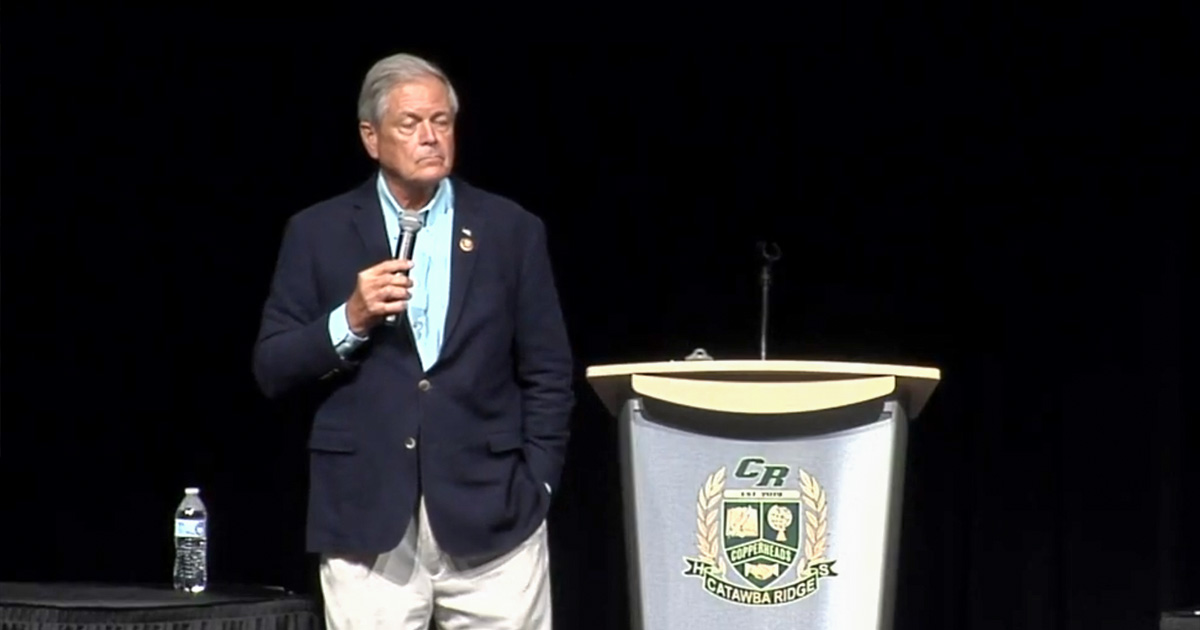
Back in 2024, after growing public outrage over York County ignoring the BZA ruling and issuing permits to Silfab, Norman decided to hold a public forum in an attempt to silence the growing outrage.
During his forum, Norman downplayed the fact that he took campaign contributions from Silfab’s lobbying firm (SEIA), to being the co-founder of the Congressional Solar Caucus, and to personally pressuring the York County Council to approve Silfab’s chemical facility next to our schools, all while lying about the chemicals and yelling at residents.
At timestamp 1:46:35 Norman said “…I talked to [York County] council members when they asked my support for the [Silfab’s] fee in lieu and I agreed with that, so they wanted me to call people, so yes…people called me and said they may have trouble getting their [Silfab’s] fee in lieu – I said, ‘that’s not right’ – I make calls at time if they ask me to. Somebody said call somebody, so I did that…” (this is corroborated by York County Councilman Watts Huckaby stating during Silfab’s fee in lieu meeting, “…so I’m going to say publicly, Ralph Norman supports this project…”)
At timestamp 1:34:02 Norman said, “I didn’t know what silane was until I started looking at it – there’s 5,000 different types [of silane], it’s in concrete that you drive on – there are more chemicals at Home Depot and Walmart…I’m not at all concerned about it after looking into it.”
These statements prove especially damning. Norman misled the audience by claiming thousands of harmless silane varieties exist in everyday products like concrete. In reality, the silane used at Silfab is specifically SiH4 (according to numerous public documents) — a single, highly dangerous compound. Silane (aka SiH4) is pyrophoric and ignites spontaneously on contact with air. It is extremely explosive and toxic. Silfab’s own documents show the plant stores 26,456 pounds of this high-hazard gas.
 The factory also holds 15,850 gallons of hydrofluoric acid — fatal if inhaled, swallowed or absorbed through skin. It plans on storing massive amounts of anhydrous ammonia, hydrochloric acid, sulfuric acid, boron trichloride, trimethylaluminum, phosphorus oxychloride, and numerous other deadly and highly-explosive chemicals, according to company documents.
These hazards now show real consequences. Workers suffer repeated medical emergencies after multiple chemical spills at the plant. Recent calls include a 23-year-old man struggling to breathe, a 25-year-old woman vomiting blood, as well as numerous other calls involving seizures, chest pain, high blood pressure and gas leaks.
By comparing the factory to Home Depot shelves, Norman implied everyday stores pose greater danger. His words misled the public and built false support for Silfab while residents feared for nearby schools.
Norman’s Federal support flowed to Silfab
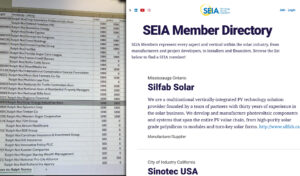
In May 2024, the company won a $5 million grant from the Federal Solar Energy Technologies Office. Norman’s district secured the project. Meanwhile, OpenSecrets records show Norman received campaign contributions from Silfab’s lobbying group, SEIA.
Then came the big legislative move. In 2025, the House voted on President Trump’s “Big Beautiful Bill”. Norman held out at first as the tie-breaking vote. He negotiated last-minute changes to the bill, including accelerated repeals of Biden-era solar and wind credits, and then voted yes as the deciding vote to make the bill pass.
Silfab already had its grants, permits, and $100 million private funding locked in. Heavy tariffs on Chinese imports gave Silfab’s factory a premium edge. Competitors still seeking approvals faced a capital drought. Many canceled or downsized U.S. factories.
Norman’s last-minute changes and deciding vote on the Big Beautiful Bill protected Silfab’s Fort Mill factory and blocked newer rivals.
In a recent interview with WCNC, Ralph Norman downplayed his involvement in Silfab and repeated the line that ‘local decisions rest with local county officials’. Yet he failed to mention any of his numerous actions on both a local and federal level that helped Silfab narrowly secure approvals to build their heavy industrial factory in a light industrial district next door to 2 new schools.