
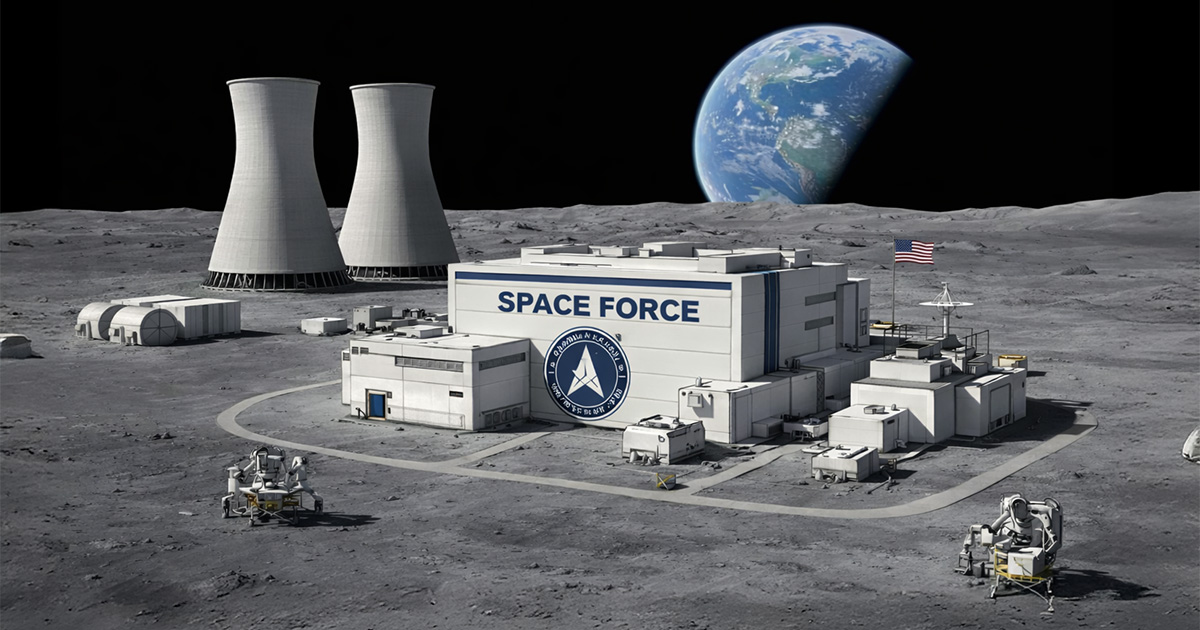
 President Trump is now accelerating plans to build a nuclear reactor on the Moon, and the expertise from the Charlotte region is driving that effort.
The US Department of Energy and NASA announced a renewed partnership to deploy a nuclear fission reactor on the Moon by 2030, advancing a central goal of Trump’s America First Space Policy. The plan calls for nuclear power to support permanent lunar missions and future exploration of Mars.
“Under President Trump’s national space policy, America is committed to returning to the Moon, building the infrastructure to stay, and making the investments required for the next giant leap to Mars and beyond,” said NASA Administrator Jared Isaacman in a press release. “Achieving this future requires harnessing nuclear power. This agreement enables closer collaboration between NASA and the Department of Energy to deliver the capabilities necessary to usher in the Golden Age of space exploration and discovery.”
Westinghouse Electric Company, a global nuclear leader with engineering offices in SouthPark and a major design and manufacturing facility in Rock Hill, is helping design NASA’s lunar reactor. The company received a $5 million federal contract to adapt its proprietary eVinci microreactor—a sodium-cooled, heat-pipe system known for reliability and efficiency—into the AstroVinci variant tailored for space.
Westinghouse supplies reactor technology, fuel systems, and engineering support for Duke Energy’s nuclear plants at Lake Norman and Lake Wylie, including the McGuire and Catawba Nuclear Stations. Engineers working on those lakeside reactors routinely handle refueling, safety analysis, digital upgrades, and long-term operations — the same disciplines required for nuclear systems in space.
At the University of North Carolina at Charlotte, the Energy Production and Infrastructure Center serves as a bridge between industry and academia. Westinghouse donated more than $3 million in equipment, services, and scholarships to the center, creating hands-on labs that simulate real-world reactor operations.
Many graduates go on to work for Westinghouse and some could soon be helping to put the first reactor on our lunar surface.