
 Siemens will invest more than $165 million across North and South Carolina, creating 350 jobs and opening new facilities to support booming AI data centers. However, the rapid growth is also driving concerns about rising energy demand, infrastructure strain, and potential community impacts.
Most of the expansion is centered in North Carolina, where Siemens is building two facilities and expanding another. In Raleigh, a 131,000-square-foot site will add 100 jobs assembling prefabricated power systems for faster data center deployment.
In Wendell, a 101,000-square-foot facility will create 50 jobs producing automation and protection equipment. The company will also expand its existing campus, adding more than 200 jobs by 2028.
In South Carolina, Siemens will open a 120,000-square-foot facility in Spartanburg and expand its site in Roebuck. Together, those projects will bring 150 new jobs to Spartanburg County while increasing manufacturing capacity.
The investment reflects surging demand tied to artificial intelligence infrastructure and capacity.
“Customer demand is at an all-time high as advanced infrastructure upgrades are needed to meet the power requirements from increasing AI workloads,” said Ruth Gratzke, President of Siemens Smart Infrastructure US in a press release. “Through sustained investment in U.S. manufacturing, Siemens is enhancing its capacity to meet the needs of data center and AI factory customers during this transformative phase of the AI industrial revolution.”
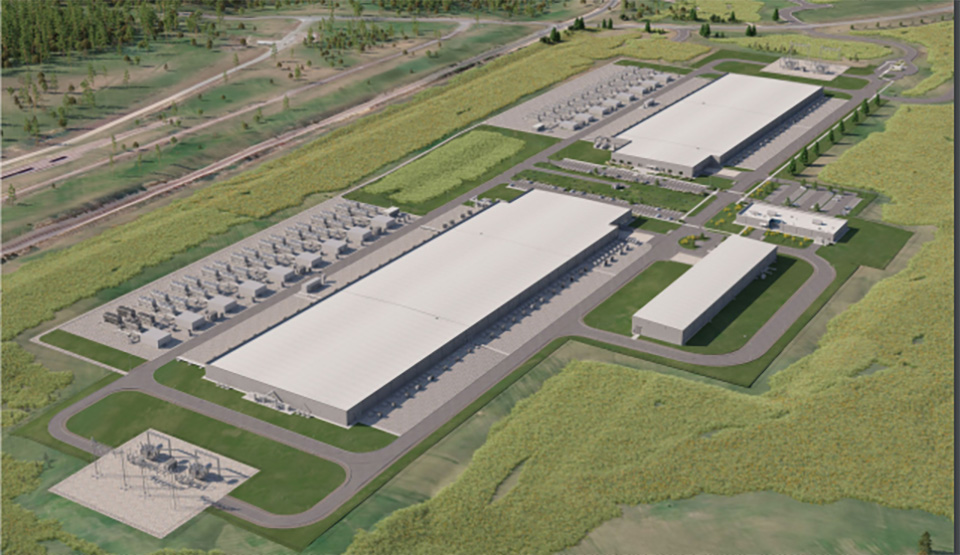
Massive data centers are spreading quickly and require enormous amounts of electricity and constant cooling. A single large facility can use as much power as roughly 200,000 homes. At the same time, cooling systems and server equipment run nonstop, generating persistent low-frequency noise.
For the Charlotte region and surrounding areas, the expansion strengthens the Carolinas’ role in the nation’s AI economy. Still, the rapid pace of growth is raising new questions about long-term energy use, environmental impact, and quality of life for nearby communities.