
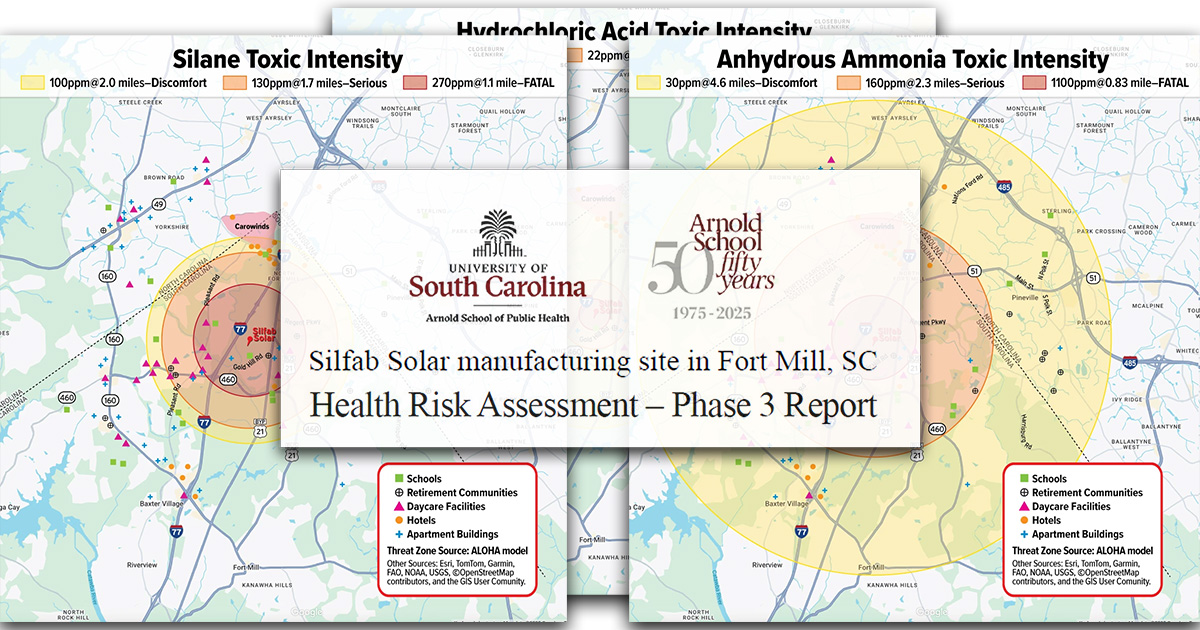
A new University of South Carolina (USC) health study is now raising alarms about potential chemical-release risks from the under-construction Silfab factory in Fort Mill.
The study, commissioned by the local advocacy group Citizens Alliance for Government Integrity (CAGI) and released this week, modeled accidental releases of 5 hazardous chemicals (out of a total of 21 total hazardous chemicals Silfab would use, according to the report), including Anhydrous Ammonia, Silane, Hydrofluoric Acid, Hydrochloric Acid, and Nitrous Oxide.
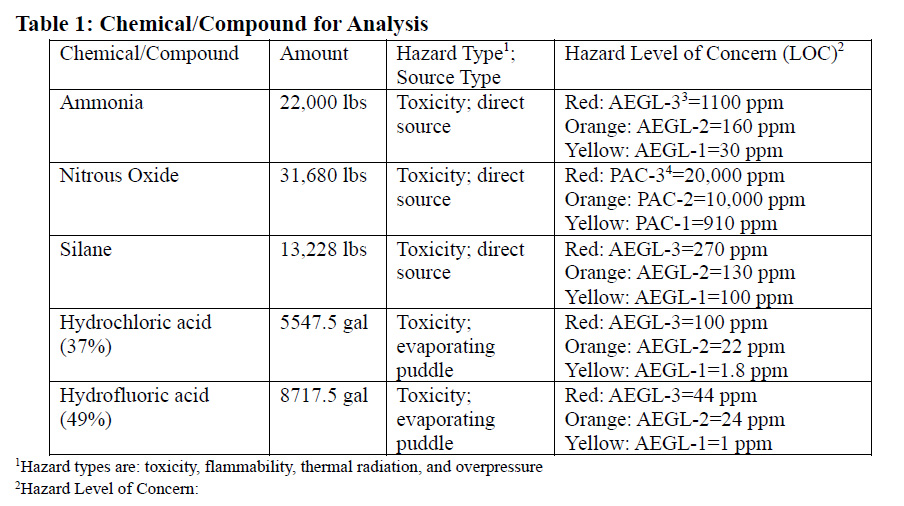
The study concluded that hazardous plumes could travel miles and cause irreversible harm to dozens of nearby neighborhoods and schools.
“These findings show that the consequences are not minor and they are not hypothetical,” said Andy Lytle, president of CAGI. “When emergency-response modeling shows the potential for life-threatening or deadly exposure well beyond a facility’s boundaries, the only responsible conclusion is that this facility does not belong next to schools and neighborhoods.”
Silfab was unhappy with the findings, calling the modeling unrealistic. In response to the report, the company said:
“The most recent sponsored study promoted by CAGI still fails to include Silfab Solar’s actual processes, engineered systems, multiple approved risk mitigation systems and safety measures in its assessment of a worst-case scenario.”
The USC researchers stated that their analysis examined credible risk scenarios using chemical quantities provided by Silfab’s own filings, industry standard modeling, and ‘engineering experience’.
“Large quantities of hazardous chemicals pose an inherent risk to the surrounding populous and environment. Accidents, terrorism, or vandalism causing a chemical release at the Silfab Solar SC facility (Silfab), coupled with damage to (or complete failure of) the facility’s safety systems (scrubbers, sumps, high level alarms, etc.), can lead to catastrophic consequences. Further, accidents or terrorist attack during delivery of bulk chemicals on nearby roadways where safety systems are not in place can also lead to catastrophe,” the report noted. “This report is based largely on ALOHA runs, physical security expertise, and general engineering experience. ALOHA (5.4.7) was developed for emergency responders and planners by the Office of Emergency Management, EPA and the Emergency Response Division, NOAA.”
The dispute comes as community opposition to the project has been intensifying and the project’s zoning approvals and permitting appear to be on increasingly shaky ground.
In a recent legal filing, the York County BZA, a quasi-judicial branch of York County, stated that Silfab’s permits did not comply with the zoning code.
The filing specifically contradicts the county’s long-standing position that last year’s BZA ruling did not apply to the controversial Silfab factory, which is currently being built on a light industrial-zoned property in Fort Mill, South Carolina.
On May 9th, 2024, the York County Board of Zoning Appeals ruled that “Solar Panel
Manufacturing” is not permitted in York County’s “Light Industrial district”.

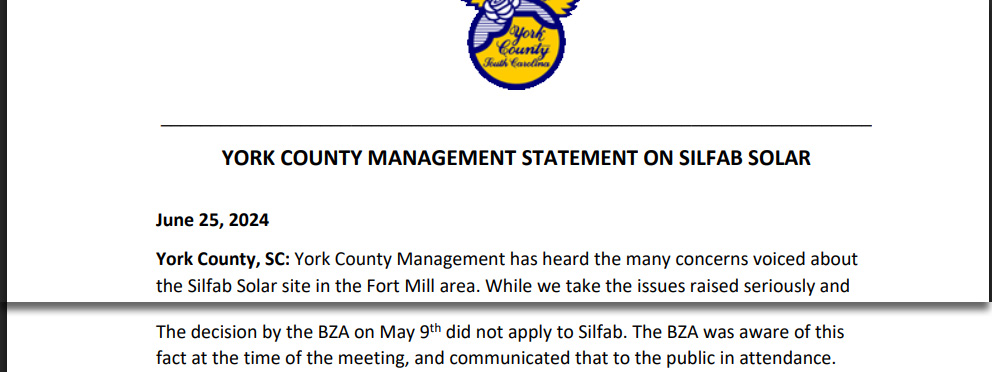
However, just one month later, York County issued an unsigned management statement (still on their website here) that stated that “The decision by the BZA on May 9th did not apply to Silfab”.
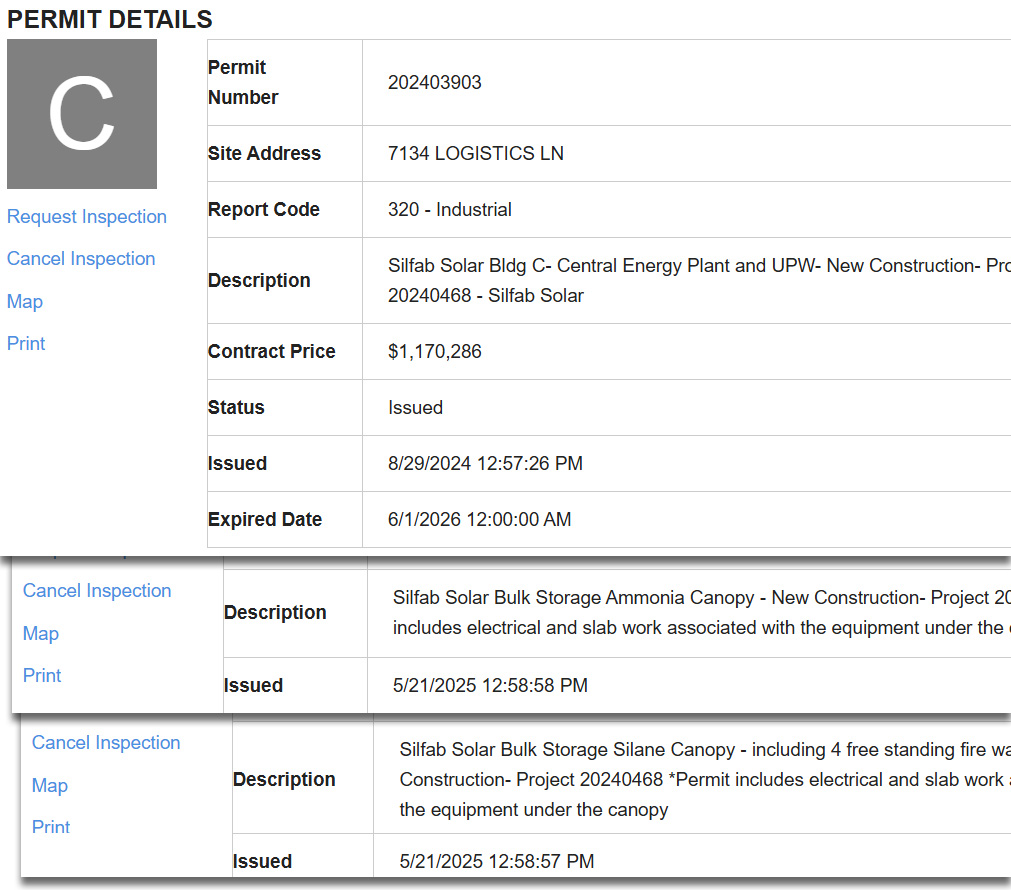
Soon after this statement was released, York County Planning and Zoning, under the authority of York County Manager Joshua Edwards, began issuing permits to Silfab to begin construction, including permits for their central energy plant, chemical storage buildings and bunkers, wastewater treatment plant, and chemical processing lines.
In the new filing (case #2024CP4602641), York County’s BZA attorneys correct the County’s long-standing position that the BZA “did not apply to Silfab”.
The York County BZA attorneys state, in part;
“…Buchanan’s request for a Zoning Code Interpretation sought to confirm whether
Silfab’s solar cell and panel manufacturing use complies with all applicable zoning provisions, including the table of uses governing the Light Industrial District where the Facility is located…” (pg 5/18)
“…As the Facility’s neighbor, Buchanan surely has an interest in confirming whether Appellants’ solar cell and panel manufacturing use complies with the Zoning Code. If it does not, as the BZA found, interested parties (including Buchanan and, of course, the County) can obtain a court order enjoining the disallowed use as well as other relief. S.C. Code Ann. § 6-29-950 (authorizing both local governments and an “adjacent or neighboring property owner” to sue to enjoin the unlawful use of property)…” (pg 10/18)
“…the record supports the BZA’s decision that solar cell and panel manufacturing is an unlisted, prohibited use of a heavy industrial nature…” (pg 11/18)

Now that the York County Board of Zoning Appeals clarified that their ruling last year did apply directly to Silfab, before their permits were issued, their permits seem to be legally void, according to York County Code § 155.1121, “No building permit shall be issued… until zoning compliance has been approved by the Zoning Administrator”, and according to SC Peterson v. Greenville County, 2011, “An invalid zoning permit issued in violation of applicable zoning laws confers no rights and is void ab initio”.
The York County Council will now have to decide if they will attempt to re-zone Silfab’s property to heavy industrial or if they will revoke the permits that were issued to Silfab in violation of the zoning code.