
 South Carolina lawmakers have released a proposed congressional map that could significantly reshape the state’s political landscape ahead of the 2026 elections. The draft was introduced during a Judiciary subcommittee hearing, marking the first step in a high-stakes redistricting process.
The timing is already drawing concern. Primary voting begins in just weeks, and some ballots have already been cast, raising questions about changing district lines this late in the cycle.
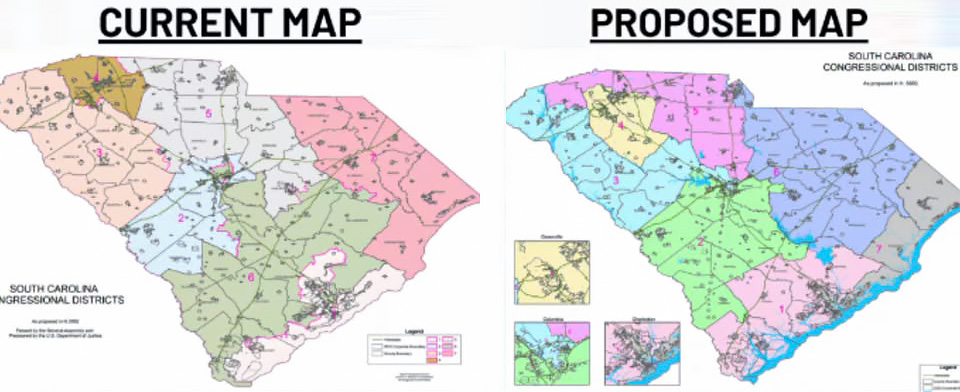
The proposal could shift political balance across the state. South Carolina currently has six Republican-leaning districts and one Democratic district. The new map aims to redistribute Democratic voters from the Sixth District, potentially creating seven Republican-leaning districts.
Lawmakers say the plan is only a “starting point,” but early details show major changes across multiple regions.
Current Congressional Map Overview
- 7 total districts: 6 Republican, 1 Democratic
- SC-06 (Rep. Jim Clyburn) is the only Democratic-leaning district
- York County is largely grouped in SC-05
- Charleston and Richland counties are already split between districts
- Voting patterns show strong Republican advantages in most districts
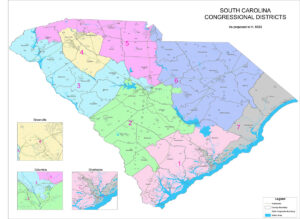
Proposed Congressional Map Changes
- All 7 districts shift toward Republican-leaning outcomes
- SC-06 becomes more Republican, dropping from a strong Democratic majority
- York County split:
- Rock Hill and Tega Cay remain in SC-05
- Fort Mill moves to SC-06
- Richland County divided into three districts
- Charleston County reconfigured between SC-01 and SC-07
- Orangeburg, Hampton, and Allendale counties shift districts entirely
- Spartanburg split between two districts
The push for new maps comes amid a broader national trend, with states like North Carolina, Texas, and California also redrawing districts ahead of the 2026 elections.
During the hearing, lawmakers heard hours of public testimony. Concerns came from both parties, including voter confusion and the challenge of learning new districts so close to an election.
While lawmakers did not advance the map itself, they approved a separate proposal to delay the primary election until the second Tuesday in August. That bill now heads to the full House Judiciary Committee.
For fast-growing areas like York County and the Charlotte suburbs, the proposed changes could reshape representation and political influence heading into a critical election cycle.