
UPDATE 3/30/2026 4:00pm:
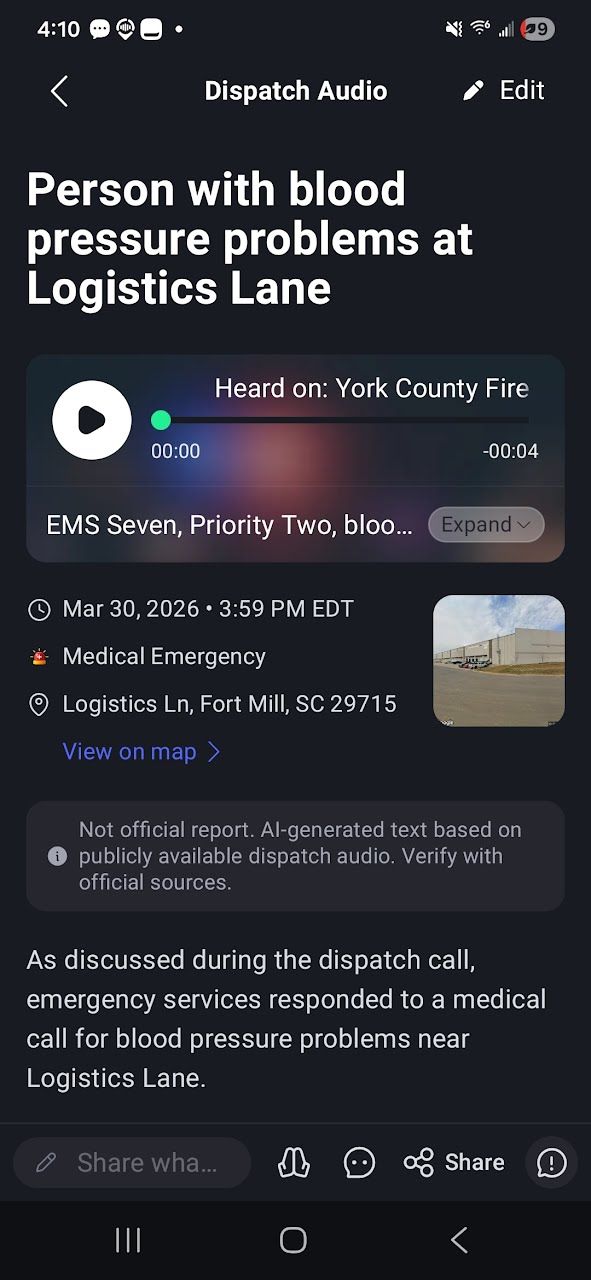
Another emergency medical call came in for someone experiencing blood pressure problems at Silfab’s factory. This is another potential health side-effect of the toxic chemicals they use on site.
UPDATE 3/28/2026 8:00am:
Yet another call came in late last night of a 25-year-old woman vomiting blood at Silfab – here was last nights call heard over the emergency scanners:
Sat. 3/28/2026 12:50 AM YC Fire/EMS Emergency Dispatch to Silfab, EMS 214 Abdominal pain. Adult female patient abdominal pain, 25 YO female, located in women’s locker room, meet at the front entrance, vomiting blood, also complaining of lightheadedness and headache.
Original Article 3/26 6:00pm
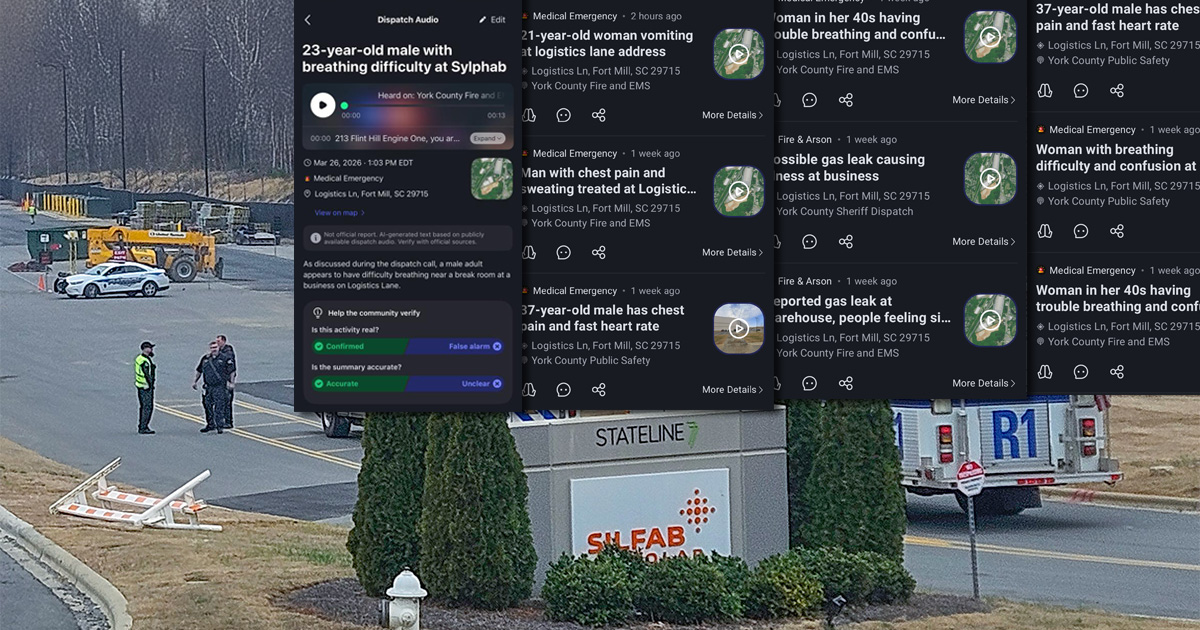
This afternoon York County emergency crews rushed to the Silfab factory after reports of a 23-year-old male was having trouble breathing.
Today’s incident is just one more in an ever-growing list of medical calls, emergency alarms, and leak-related responses at Silfab Solar – adding new pressure to an already volatile fight over the Fort Mill factory’s safety and legality.
 The concern is no longer limited to zoning lawyers and nearby residents. In recent weeks, York County reported that 1,530 gallons of potassium hydroxide spilled into a retention pond beside Flint Hill Elementary School, and officials later confirmed a second leak involving hydrofluoric acid that led to a two-day school closure and a state-ordered operational pause.
That backdrop makes the factory’s recent string of emergency calls even more significant. Publicly available dispatch calls show repeated calls for breathing trouble, chest pain, vomiting, seizure activity, and other significant health and safety issues at Silfab’s factory at 7149 Logistics Lane over the past couple months.
There have been no similar emergency calls over the past 2 months at ES Foundry solar cell factory in Greenwood, SC, nor at the Suniva solar cell factory in the Atlanta area (both of which are located in heavy industrial zoned areas).
Recent documented emergency calls at 7149 Logistics Lane include:
- 3/30/2026, 3:59 p.m. – an emergency call came in for a person at Silfab experiencing blood pressure problems.
- 3/28/2026, 12:50 a.m. – 25-year-old woman vomiting blood with abdominal pain, lightheadedness, and headache.
- 3/26/2026, 1:01 p.m. — 23-year-old male trouble breathing call; dispatch said the patient called from inside the building
- 3/9/2026, 9:51 p.m. — neighbors called after hearing emergency evacuation alarms; no injuries were reported
- 3/4/2026, 8:03 p.m. — woman reported sickness, breathing trouble, inability to talk or swallow, and vomiting; transported to Pineville
- 3/1/2026, 6:48 p.m. — 21-year-old woman reported sickness and vomiting for about 30 minutes
- 2/26/2026, 1:42 p.m. — 45-year-old woman reported severe headache and high blood pressure; taken to Pineville Hospital
- 2/20/2026, 12:45 a.m. — 37-year-old man reported cardiac symptoms and chest pain
- 2/19/2026, 10:48 p.m. — 40-year-old woman reported trouble breathing and confusion
- 2/17/2026, about 3:00 a.m. — gas leak call brought fire, emergency management, and sheriff’s deputies; caller reported people getting sick
- 2/4/2026, 3:28 a.m. — seizure call
- 1/12/2026, 8:10 a.m. — 29-year-old man reported chest pain and difficulty breathing
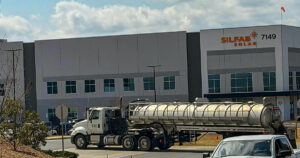 Those calls come from a roughly 900,000-square-foot TOPCon solar cell and panel facility we previously reported on. Technical documents tied to the project show the plant is designed to turn raw silicon wafers into finished solar panels through a multi-stage manufacturing process involving strong acids, explosive gases, chemical wastewater treatment, toxic air emissions, and industrial sludge.
Silfab’s own documents indicate the company planned to store major quantities of hazardous chemicals on site, including:
- 15,850 gallons of hydrofluoric acid — corrosive; fatal if inhaled, swallowed, or in contact with skin
- 26,456 pounds of silane — pyrophoric toxic gas that can ignite on contact with air
- 44,000 pounds of anhydrous ammonia — highly flammable, corrosive, and toxic if inhaled
- 1,945 pounds of phosphorus oxychloride — a Schedule 3 chemical under the Chemical Weapons Convention
- 1,540 pounds of boron trichloride — toxic if inhaled; causes burns and eye damage
- 951 pounds of trimethylaluminum — pyrophoric, toxic, and violently reactive with water
- 10,560 gallons of hydrochloric acid — corrosive; can cause severe burns and lung damage
- 9,198 pounds of sulfuric acid — oxidizer; can cause respiratory injury, burns, and blindness
The growing safety concerns have now spilled into schools and state politics. On March 10, the Fort Mill School Board passed a formal resolution asking top state officials and York County Council to permanently limit the site to “non-hazardous assembly processes” and remove all hazardous chemicals from the property “in accordance with the facility’s current light industrial zone.” The board acted after the potassium hydroxide and hydrofluoric acid incidents that occurred within a few hundred feet from Flint Hill Elementary School.
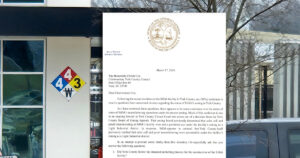 The legality fight remains just as serious. York County’s own Board of Zoning Appeals ruled unanimously on May 9th, 2024 (before any of Silfab’s permits were issued) that solar panel manufacturing “is not listed” in the Light Industrial district and is therefore prohibited under section 155.270(G). Attorney General Alan Wilson recently issued a letter to York County Council Chairwoman Christi Cox asking why permits were issued to Silfab after the BZA ruled their use unlawful.
For Fort Mill, the local impact is becoming harder to ignore. Families next to the plant are now weighing not only the zoning question, but also a mounting record of medical calls, alarms, spills, and emergency responses at a factory that stores some of the most dangerous chemicals used in advanced manufacturing.